Your AI guide to the monuments of Shahrisabz
Explore centuries of Timurid heritage, hear the stories, and plan your visit — in 7 languages.
Monuments
UNESCO World Heritage sites and treasures of Kesh
- 1996
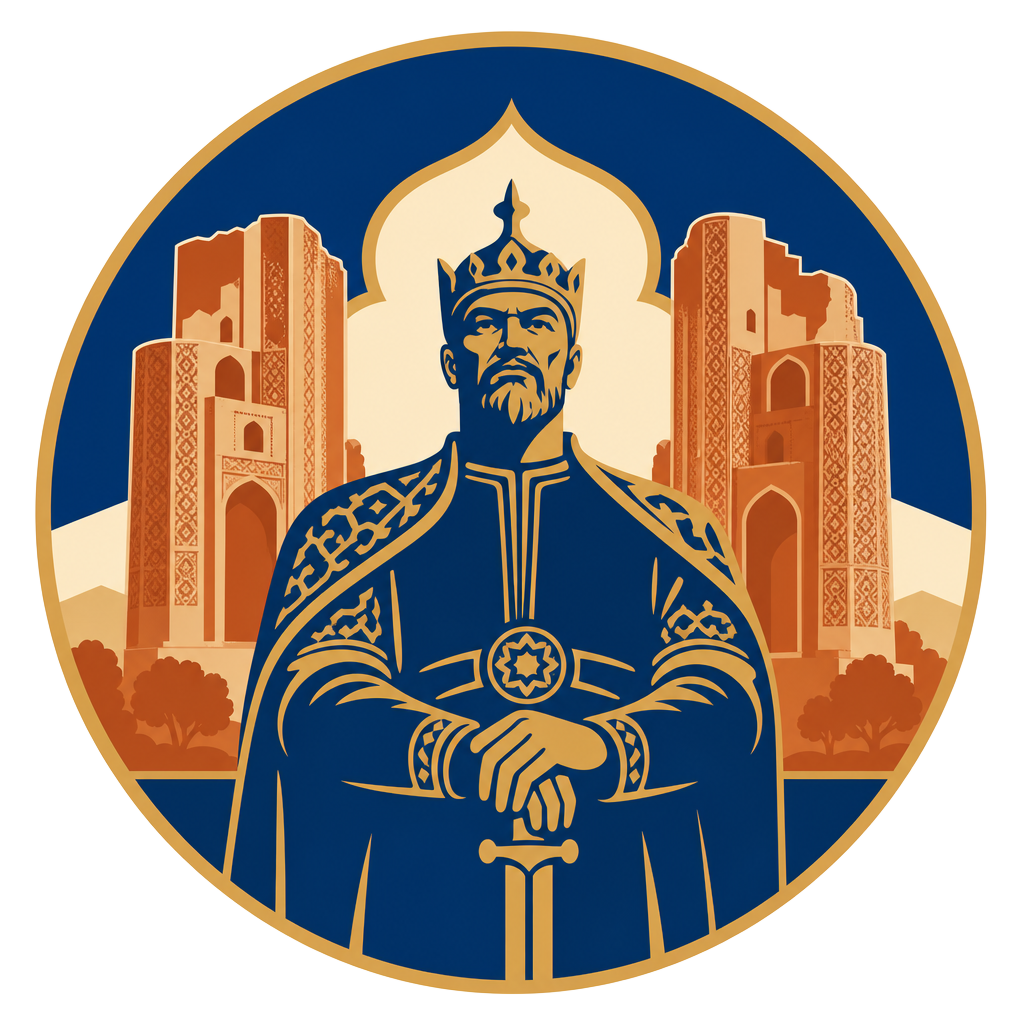
Amir Temur Haykali
АМИР ТЕМУР ҲАЙКАЛИ
A 15+ metre bronze statue of Amir Temur (Tamerlane), unveiled 18 October 1996 for the 660th anniversary of his birth. Sculpted by Ilhom Jabborov. Temur is depicted returning to his native city, gazing at the monuments he built.
Ask about this monument - 1380–1404
Oq Saroy (White Palace)
ОҚ САРОЙ
The greatest medieval palace of Central Asia, built by Amir Temur in honour of his mother Tegina Begim. Originally over 70 m high; today only the two colossal gateway pillars remain (47 m preserved). Chief architect: Muhammad Yusuf Tabriziy. Famed for extraordinary majolica and mosaic tilework in seven colours, with the inscription: 'If you doubt our power, look at the buildings we have built.'
Ask about this monument - 1378–1379
Shahrisabz City Defensive Walls
ШАҲРИСАБЗ ШАҲРИ МУДОФАА ҚАЛЪАСИ
The 12-metre-high defensive walls of Amir Temur's Kesh (Shahrisabz), enclosing a nearly 6 km² city with four gates: Samarqand, Termiz, Kunchiqar and Qushxona. Iron-plated gates were brought from Herat. Described by Spanish envoy Clavijo in 1404.
Ask about this monument - founded 1996
Amir Temur Museum of Material Culture History
АМИР ТЕМУР НОМЛИ МОДДИЙ МАДАНИЯТ ТАРИХИ МУЗЕЙИ
Established May 1996, the museum holds 23,343 exhibits across archaeological, ethnographic, numismatic and applied-art collections. Housed since 2002 in a European-style building next to the Chubin Madrasah.
Ask about this monument - 16th century
Chubin Madrasah
ЧУБИН МАДРАСАСИ
A 16th-century religious school named after one of Amir Temur's commanders, Chubin. Located in the woodworkers' quarter. Inscribed on UNESCO World Heritage List in 2000. Now houses the Amir Temur Museum.
Ask about this monument - 16th century
Koba Caravanserai
КОБА КАРВОНСАРОЙ
A single-courtyard, single-storey 16th-century caravanserai where merchants from India and across Asia rested. The only Shahrisabz caravanserai of its era that survives.
Ask about this monument - 1909
Abdushukur Oghaliq Mosque
АБДУШУКУР ОҒАЛИҚ МАСЖИДИ
Built in 1909 by a local bek named Abdushukur. An 8×8 m sanctuary with a three-sided open ayvan. Inscribed on the UNESCO World Heritage List in 2000.
Ask about this monument - late 14th – early 15th c.
Old Bathhouse (Eski Hammom)
ЭСКИ ҲАММОМ
A 22.5×15 m rectangular bathhouse with a central hall, three heated rooms and pools. Offers three climates: cool, warm and hot. Still operating today.
Ask about this monument - late 15th – early 16th c.
Chorsu
ЧОРСУ
A 21×21 m domed trade dome at the intersection of Shahrisabz's north–south and east–west routes. The name (Persian) means 'four ways'. Restored in 1994 for Ulugh Beg's 600th anniversary.
Ask about this monument - late 14th – 15th c.
Dorut Tilovat Complex
ДОРУТ ТИЛОВАТ МАЖМУИ
A complex whose name means 'House of Recitation (of the Qur'an)'. Contains three monuments: the Kok Gumbaz Mosque, the Shaykh Shamsiddin Kulol Mausoleum, and the Gumbazi Sayidon Mausoleum.
Ask about this monument - 1434–1435
Kok Gumbaz Mosque
КЎК ГУМБАЗ МАСЖИДИ
Built by Muhammad Taragay Ulugh Beg in the name of his father Shahrukh, dedicated to his grandfather Amir Temur. A double-domed Friday mosque with 10 m between the inner and outer domes, decorated with turquoise and cobalt tilework and Qur'anic inscriptions.
Ask about this monument - late 14th century
Shaykh Shamsiddin Kulol Mausoleum
ШАЙХ ШАМСИДДИН КУЛОЛ МАҚБАРАСИ
Mausoleum of the spiritual teacher of Amir Temur and his father Taragay Bahodir. Built by Temur's decree after the sheikh's death on 28 November 1370. Taragay Bahodir was reburied here in 1374 per his will.
Ask about this monument - 1437
Gumbazi Sayidon Mausoleum
ГУМБАЗИ САЙИДОН МАҚБАРАСИ
Built by Ulugh Beg in 1437, also called 'Avlodi Muborak' (Blessed Descendants). Contains the tombstones of Sayyids from Termez, descendants of Prophet Muhammad, including Amir Abul Maoli (d. 1455).
Ask about this monument - late 14th – 15th c.
Arslonxon Khanaqoh
АРСЛОНХОН ХОНАҚОСИ
A Sufi lodge east of the Dorut Tilovat complex, adjoining the Shamsiddin Kulol and Gumbazi Sayidon mausoleums. Only the mihrab section survives due to wars and invasions.
Ask about this monument - 14th–15th c.
Dorus Saodat Complex
ДОРУС САОДАТ МАЖМУАСИ
The 'Abode of Power' — a burial complex for the Timurid dynasty, originally 70 × 50 m. Contains the Jahongir Mausoleum, Umarshaykh's grave, Amir Temur's crypt, and the Hazrati Imam Mosque.
Ask about this monument - 1379–1380
Jahongir Mausoleum
ЖАҲОНГИР МАҚБАРАСИ
Built by Amir Temur for his eldest son Jahongir, who died suddenly in 1376. A three-domed mausoleum with skilled Khorezmian craftsmen brought after Temur's 1379 Khorezm campaign. Inscription inside reads: 'A wise man acts with good intent. A fool waits with good intent.'
Ask about this monument - medieval; mosque 19th c.
Hazrati Imom Mausoleum and Mosque
ҲАЗРАТИ ИМОМ МАҚБАРАСИ ВА МАСЖИДИ
Attributed by some sources to Hazrati Imom Abu Muhammad Abdal Keshi. In the mid-19th century a domed neighbourhood mosque with a large timbered ayvan and hujras was added.
Ask about this monument - 1394
Amir Temur's Crypt (Sogona)
АМИР ТЕМУР ДАҲМАСИ
Built in 1394 as Amir Temur's own intended burial place: a 6.4 × 6.1 m crypt with a 2.5 × 1.4 × 0.73 m stone sarcophagus. Its lid bears Arabic inscriptions and Qur'anic verses. Empty — Temur was buried in Samarkand at Bibi-Khanym's direction.
Ask about this monument - 1394
Umarshaykh's Grave
УМАРШАЙХ ҚАБРИ
Grave of Amir Temur's second son Umarshaykh, killed at 29 during the siege of Kurd fortress in 1394. His body was brought from Shiraz to Shahrisabz. Located east of the Jahongir Mausoleum in the Dorus Saodat complex.
Ask about this monument - early 20th c.
Qunduzak Mosque
ҚУНДУЗАК МАСЖИДИ
An 8.5×8.5 m single-domed neighbourhood mosque built for the residents of Qunduzak mahalla. Inscribed on the UNESCO World Heritage List in December 2000.
Ask about this monument - late 15th – mid 16th c.
Langar Ota Mausoleum
ЛАНГАР ОТА МАҚБАРАСИ
A Timurid mausoleum in Langar village associated with influential Sufi sheikhs, most famously Muhammad Sadiq (1460–1545), a major representative of the Ishqiya tariqa. Contains tombs of the sheikh, his son Abdul Hasan and grandson, plus an unidentified Timurid princess.
Ask about this monument